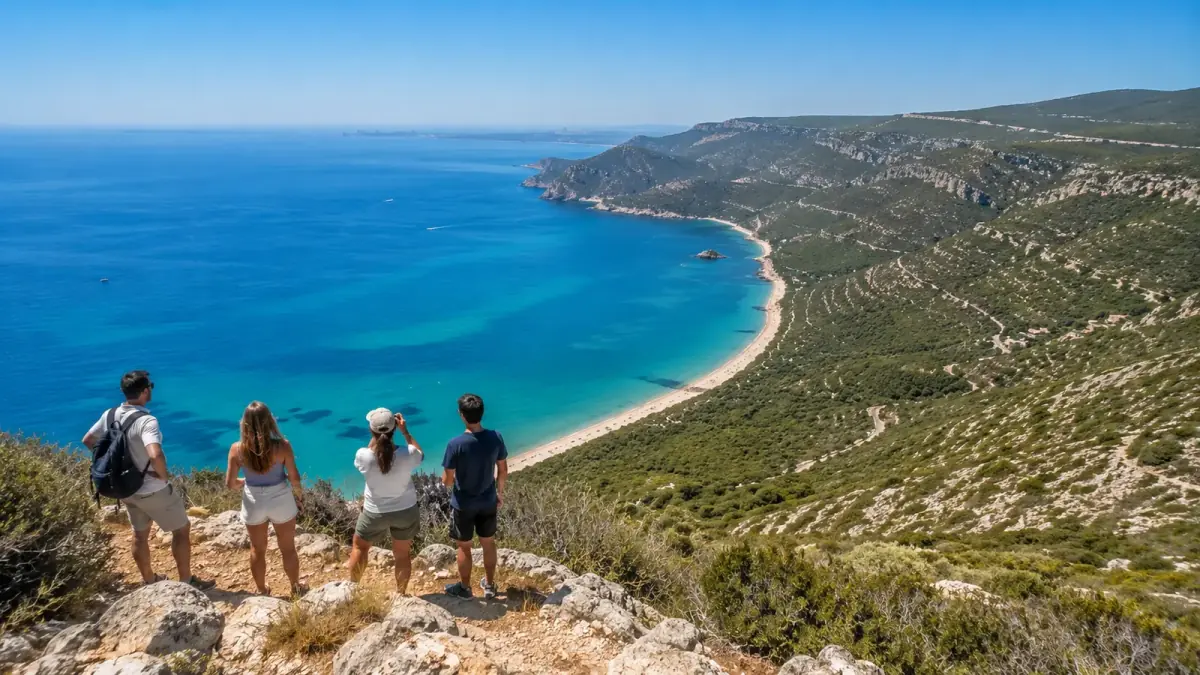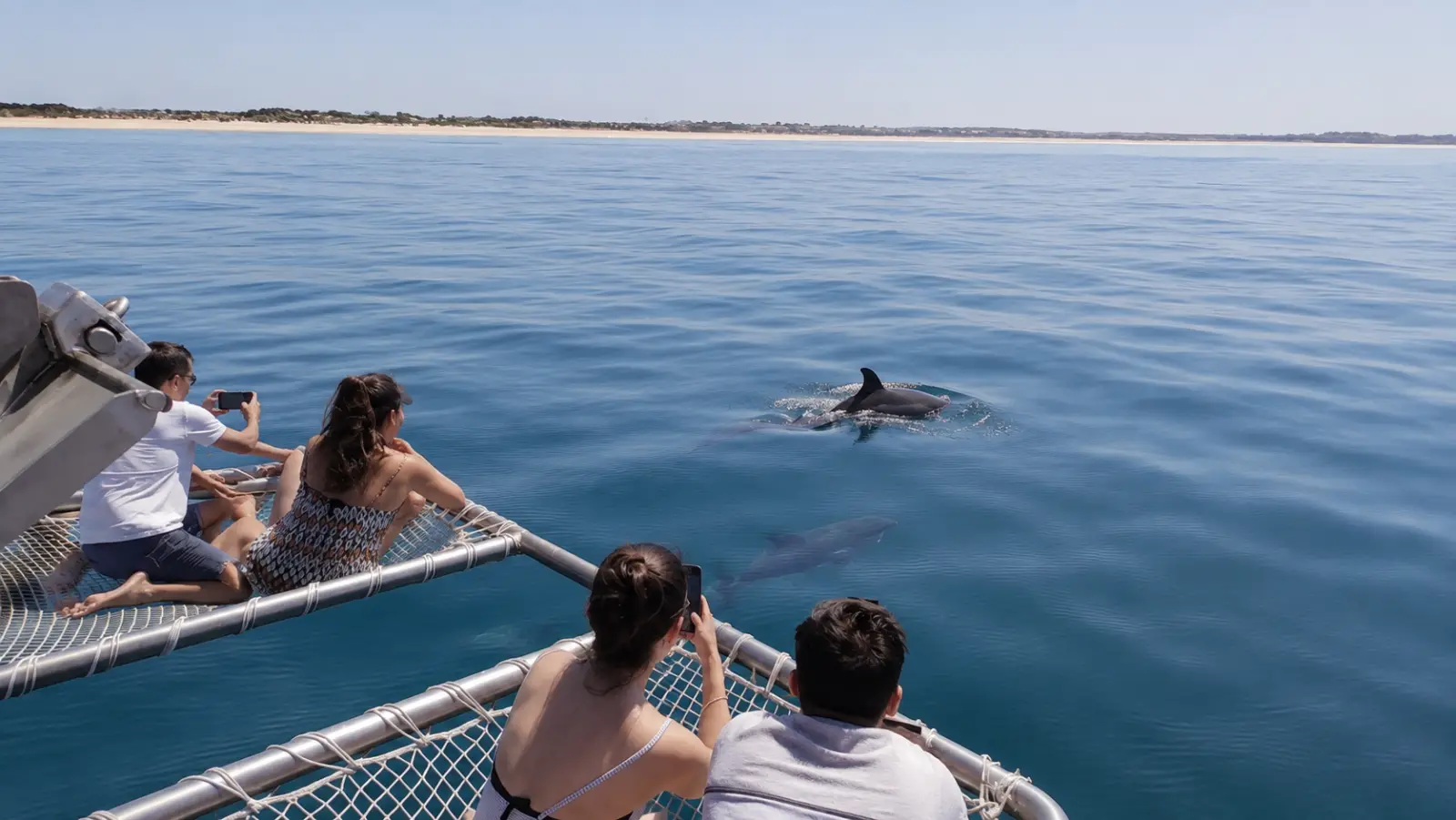
Can you see dolphins in Setúbal?
Yes. Setúbal sits beside the Sado estuary, where a small resident pod of bottlenose dolphins lives year-round. That is why dolphin watching here feels different from most sea trips: the boats are not searching open water for animals passing through. They are looking for a known local population that uses the estuary around Setúbal and Tróia.
The usual species is the bottlenose dolphin, called roaz-corvineiro in Portuguese. You may hear guides talk about individual animals by name, because researchers identify them by the marks and shape of their dorsal fins. The population is small, protected and watched closely by ICNF, Portugal's nature conservation authority.
How reliable is dolphin watching in the Sado estuary?
For wild dolphins, Setúbal is one of the more reliable places in Europe. The pod is resident, not migratory, so tours can run in every season. Still, no one should promise a sighting. These are wild animals in a working estuary, and some days they stay out of view or move through areas where boats cannot follow.
A better sign than a "guarantee" is a free rebooking policy. Good operators say plainly that sightings are likely but not certain, then let you return another day if the dolphins do not appear. That is the right expectation to bring on board.
The Sado dolphins, in plain English
1. They are resident, not trained or fed
The Sado dolphins are not part of a show, and operators should not feed them, call them in or push the boat into their path. On a normal trip you watch them surface, travel, feed or rest from a distance. Sometimes they come near the boat by choice. Sometimes you mostly see fins, backs and short breaths at the surface.
That quieter version is the honest one. If you arrive expecting jumps on cue, you will judge the trip by the wrong standard.
2. How many Sado dolphins are there in 2026?
The latest public count, reported in May 2026 from ICNF monitoring, is 25 resident bottlenose dolphins. Use a date whenever you quote the number: the community ended 2025 at 26 after the birth of Bravo and the death of the adult male Escuro, then the public count returned to 25 by May 2026.
| Date | Published count | What changed |
|---|---|---|
| July 2025 | 25 | ICNF's seasonal protection notice used 25 as the current count. |
| End of 2025 | 26 | Bravo was born in July; Escuro, born in 1996, died in May. |
| May 2026 | 25 | The latest public reporting based on ICNF's ongoing monitoring. |
This is a protected population, listed as threatened in Portugal's Red Book of Vertebrates. A crowded August afternoon is not just uncomfortable for visitors; it can put pressure on a fragile community that needs room to move through the estuary mouth.
3. The rules are part of the experience
Portugal regulates cetacean watching under Decreto-Lei 9/2006, with ICNF overseeing the activity. The practical rules are simple: boats approach from behind and to the side, keep their distance, avoid cutting across the pod, and stay with the animals for no more than 30 minutes. Swimming with the dolphins is not allowed.
Do not treat those rules as a nuisance. They are the reason the trip can exist at all.
Which tour would I book?
I would book a licensed operator with guides who explain the rules before the boat leaves, keep the approach calm and do not sell the trip as a circus. Our own trip was on the Dolphin Bay catamaran from Setúbal: marine-biologist guides, a quieter hybrid-electric boat, underwater viewing rooms in the hulls, a short swim stop when conditions allow, and about two hours on the water.
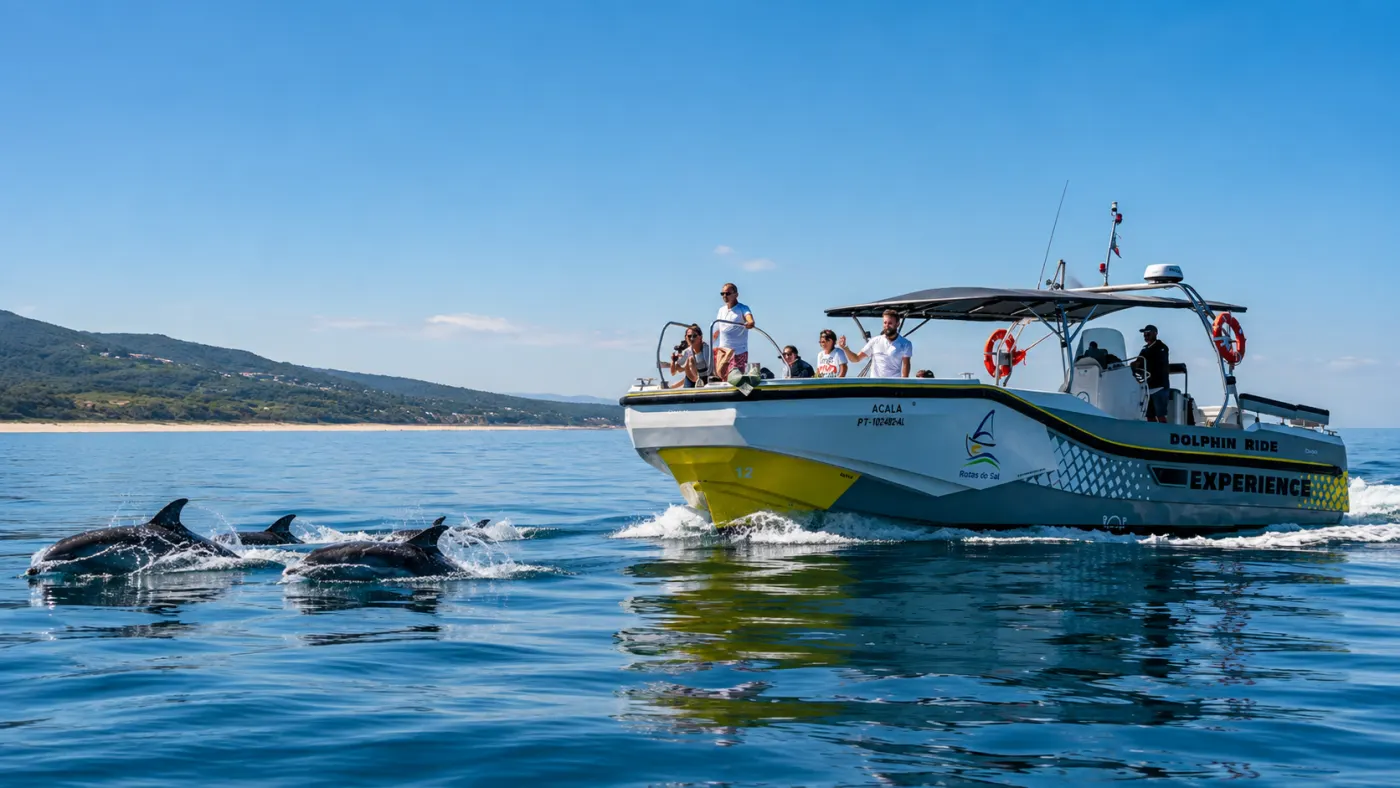
The bookable activity below is different: it is the current two-hour Rotas do Sal experience on a modern speedboat, departing from Setúbal or Tróia. Its listing advertises wheelchair accessibility and a free return voucher if no dolphins are seen. It is not the Dolphin Bay catamaran we took, so our first-hand observations about the vessel do not describe this product.
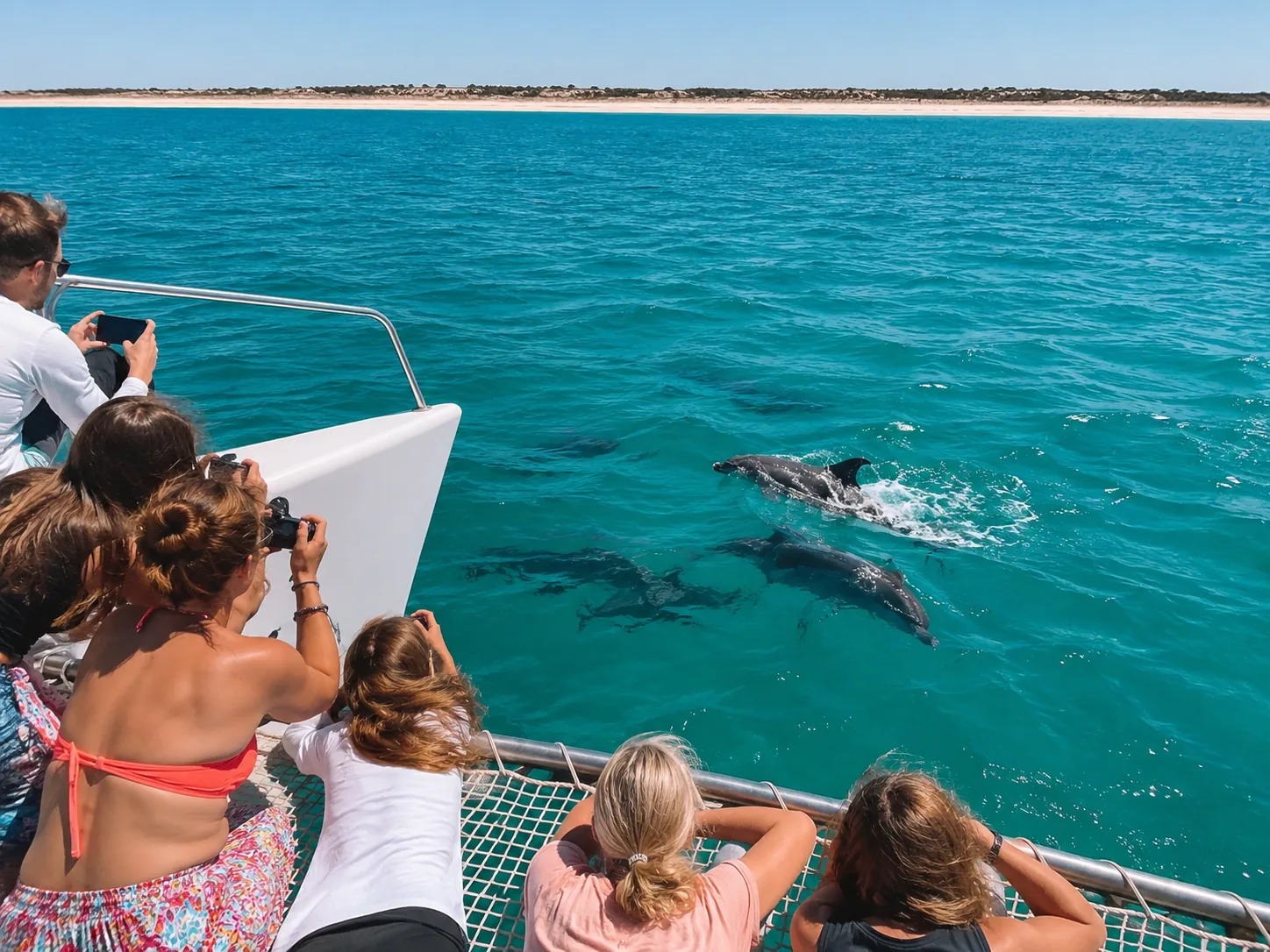
In summer, choose a morning slot if you can. The water is often calmer early, the light is easier, and the harbour feels less rushed. Book ahead for June to September, especially if you need a specific day.
Book: Setúbal & Tróia: Dolphin Watching Boat Tour
Some links are affiliate links — we may earn a commission from GetYourGuide bookings at no extra cost to you.
Still comparing? See our comparison of five dolphin tours near Lisbon for Setúbal vs Sesimbra, transport from Lisbon and family questions in one guide.
Best time to see dolphins in Setúbal
You can see the Sado dolphins in any month, but the easiest visitor window is late spring to early autumn. June, July and September are the cleanest months to plan around: warm enough for the swim stop, calmer water than winter, and fewer complications than peak August.
August needs a separate check. In recent years, ICNF has added extra restrictions at the entrance to the Sado estuary during August to reduce pressure on the pod, including an exclusion area at the estuary mouth and a daily pause in cetacean watching during part of the afternoon. The exact official notice can change, so check current rules before booking an August trip.
How to check whether a dolphin operator is licensed
Do not rely only on a booking-platform badge. Open the official ICNF list of authorized cetacean-watching companies, updated 17 June 2026, and check three details: the company name, the boat named in your booking and the authorization expiry date. The operating area must include the Sado estuary, the Setúbal coast, Tróia or the relevant stretch of the Arrábida coast. If the seller cannot tell you which licensed company and vessel will run the trip, ask before paying.
Sado dolphins vs open-sea dolphins
| Sado estuary dolphins | Open-sea dolphins off Arrábida | |
|---|---|---|
| Species you are most likely to see | Bottlenose dolphins, the local roaz-corvineiro | Often common dolphins, depending on what passes through |
| Where they are found | Inside and around the Sado estuary, between Setúbal and Tróia | Open Atlantic water beyond the estuary mouth |
| Reliability | Higher, because the pod is resident | More variable, because animals are passing through |
| What most Setúbal tours target | The resident Sado pod | Only if the route and conditions line up |
5 mistakes to avoid
- Booking the cheapest boat without checking the operator. Pick a licensed operator that explains the code of conduct and follows it on the water.
- Expecting a performance. Wild dolphins do not owe you jumps. A good sighting can be quiet: fins, breaths, calves staying close, the pod changing direction.
- Planning August without checking ICNF notices. Restrictions at the estuary mouth have been used in recent Augusts. Confirm the current notice before you lock your date.
- Trying to swim with the dolphins. It is not allowed. If your tour includes swimming, it should happen at a separate stop away from the pod.
- Arriving late at the harbour. Setúbal's waterfront is easy, but parking and boarding still take time. Arrive early enough for the briefing, life jackets and the walk to the boat.
What to bring
Bring a light layer, sunglasses, sunscreen and water. Even in summer, the breeze can feel cool once the boat leaves the harbour. If you get seasick, take your usual remedy before boarding, not after the estuary gets choppy. For photos, a phone is enough on calm days, but use a wrist strap if you plan to stand near the rail.
Sources
- ICNF — Reserva Natural do Estuário do Sado
- ICNF — nature tourism activities and cetacean-watching notices
- ICNF — authorized cetacean-watching companies, updated 17 June 2026
- ICNF — 2025 Sado protection notice and population count
- Jornal de Notícias — 2025 birth, death and year-end count, quoting ICNF
- Semmais — May 2026 public count and ICNF monitoring
- AIMM — code of conduct for dolphin and whale watching
- Gov.pt — cetacean-watching operator authorization
Read next
Build the rest of the day around the water: start with Setúbal, then look at Arrábida for beaches and viewpoints, or compare ports and routes in the Sesimbra and Arrábida boat trips guide.
Coming from Lisbon and want a guided day on the water? This option combines Arrábida kayaking, caves and a beach picnic, with Lisbon pickup available.