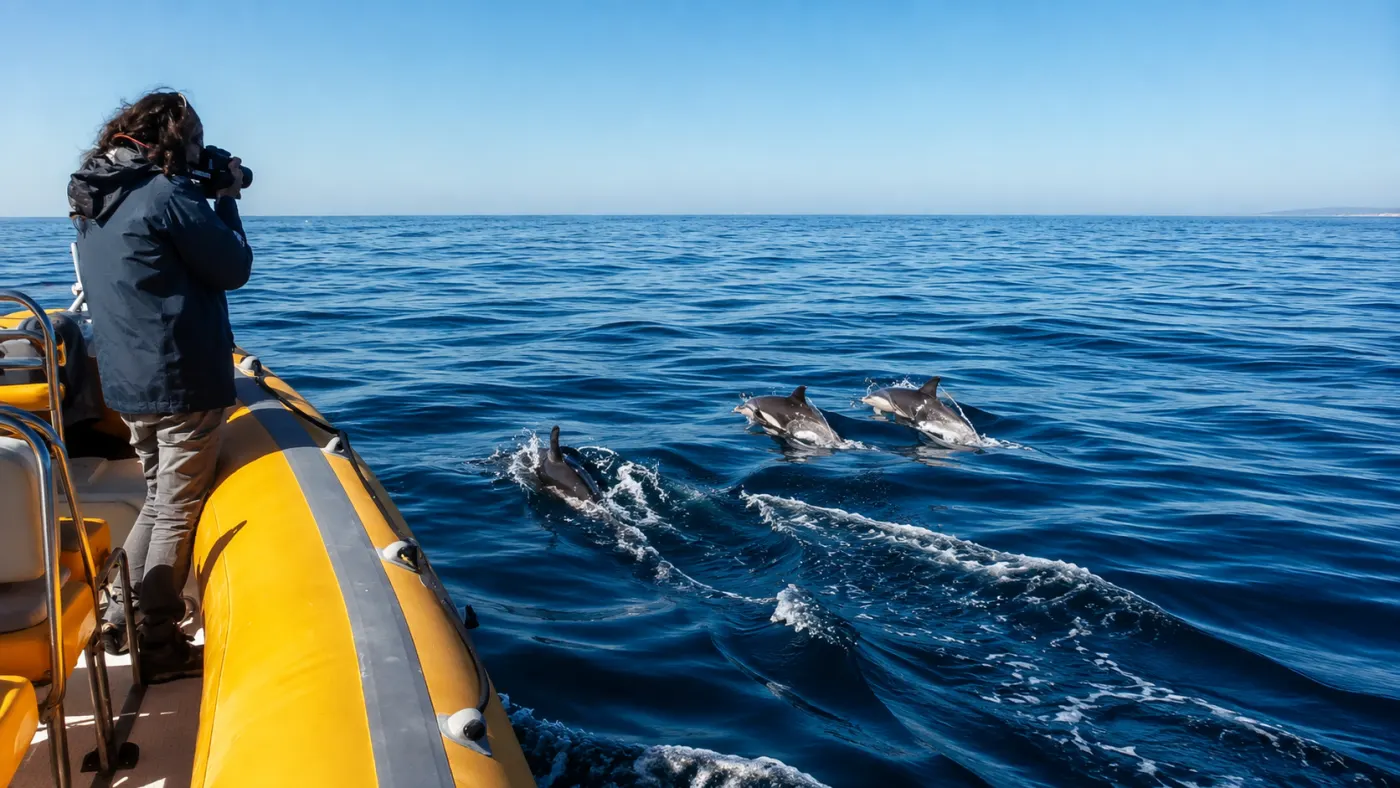
Which dolphin tour in Setúbal should you pick?
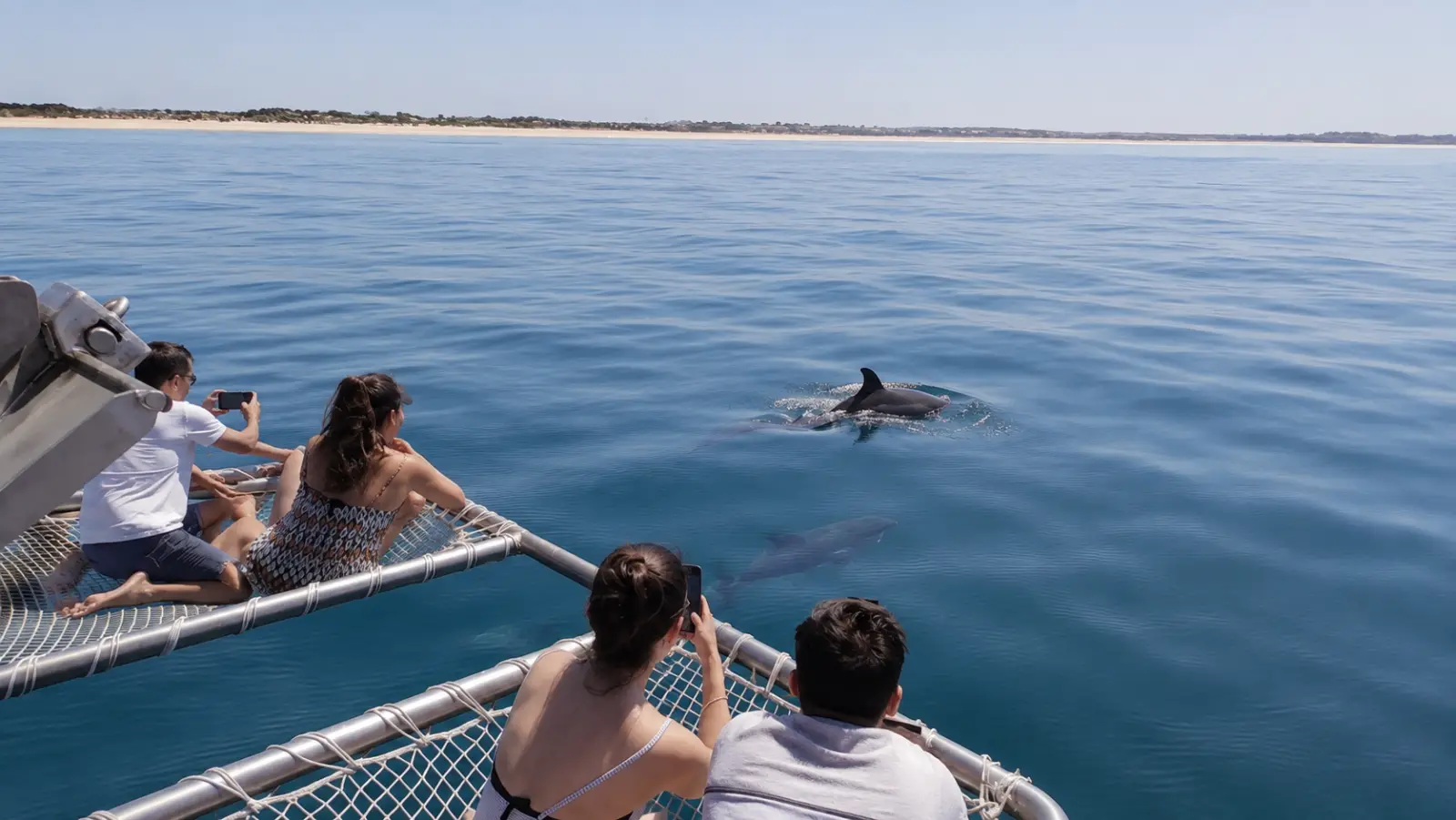
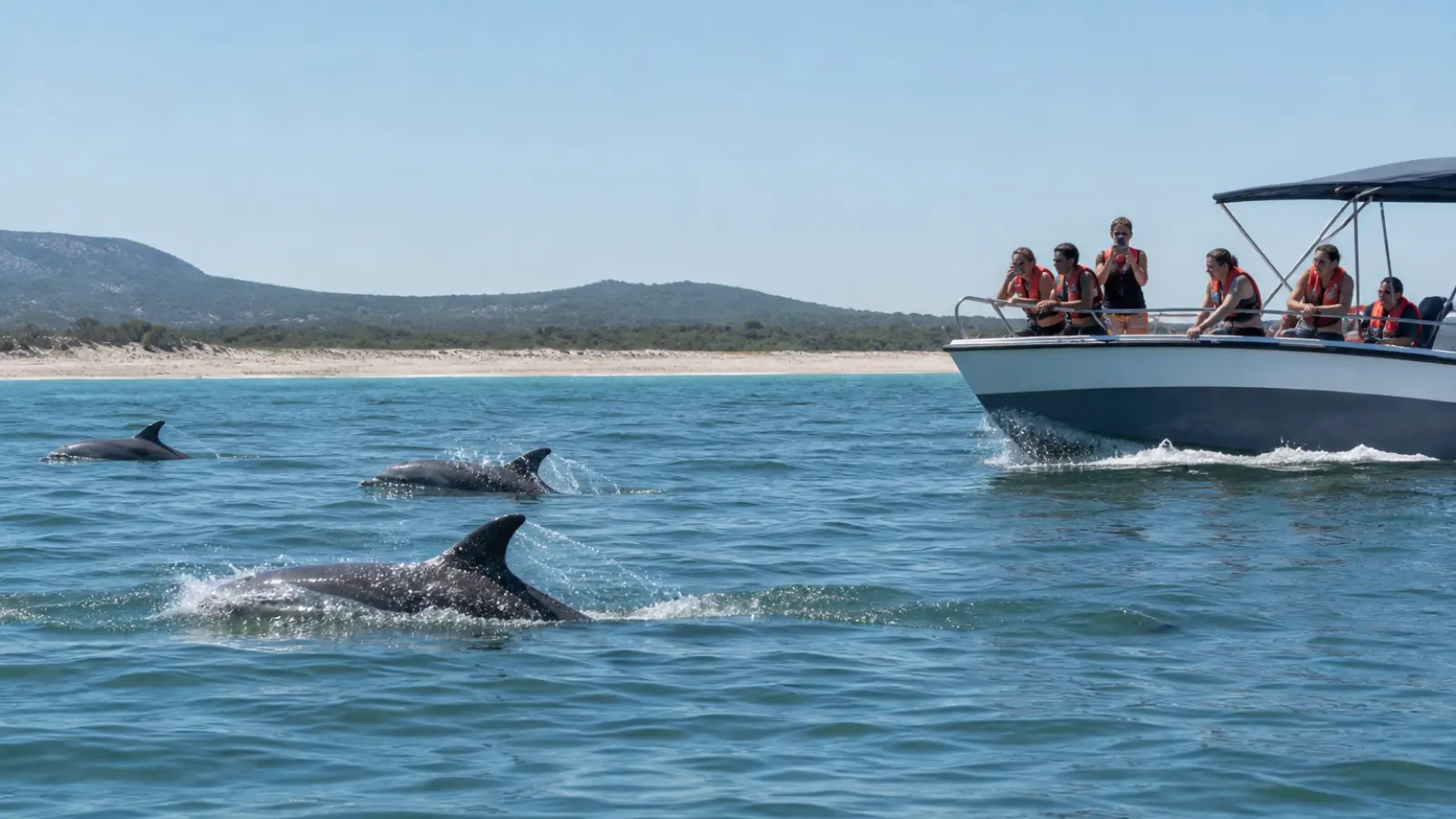
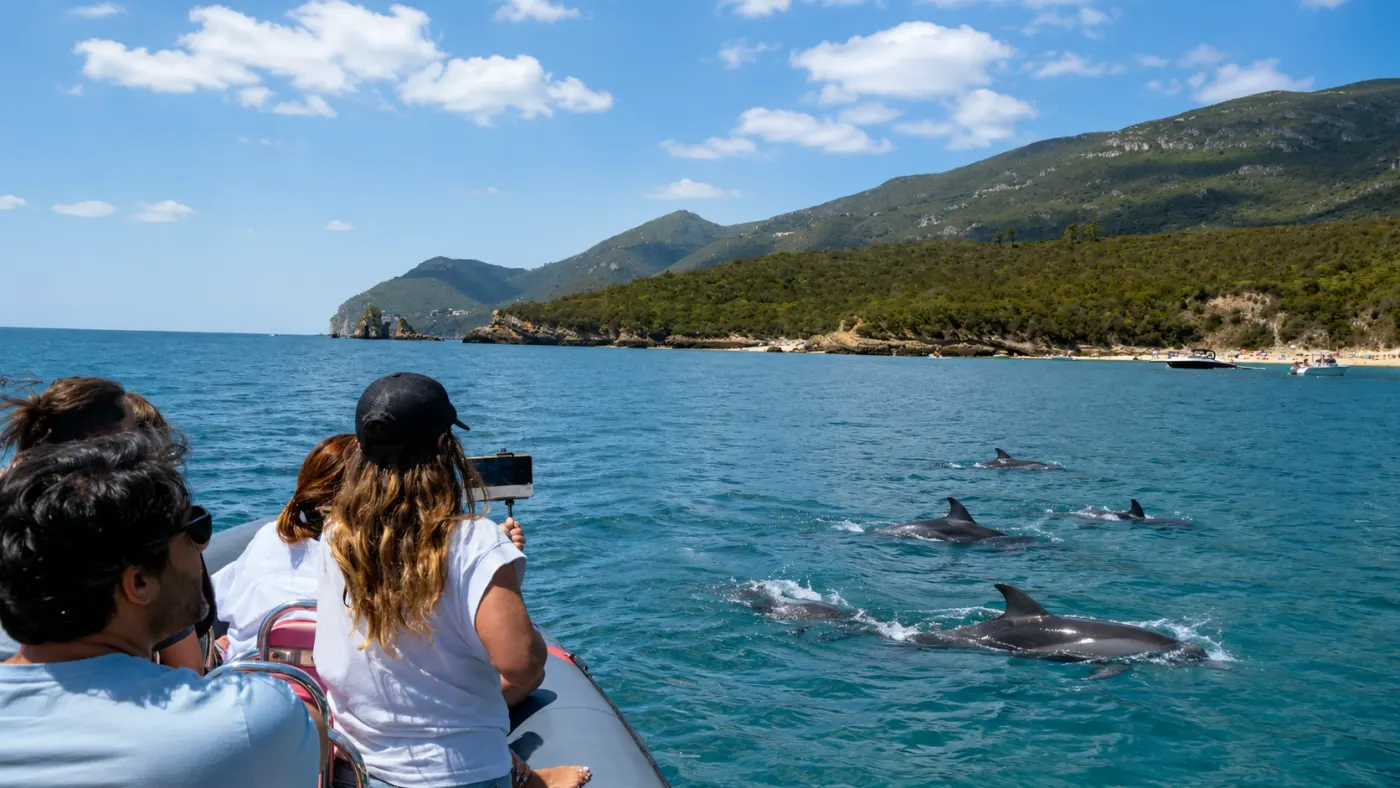
Most tours from Setúbal and Tróia head into the Sado estuary, where a resident pod of bottlenose dolphins lives all year. The latest public count, from May 2026, is 25 animals; the number changes after births and deaths. The difference between tours isn't the dolphins, it's the boat, the length and what else the route covers.
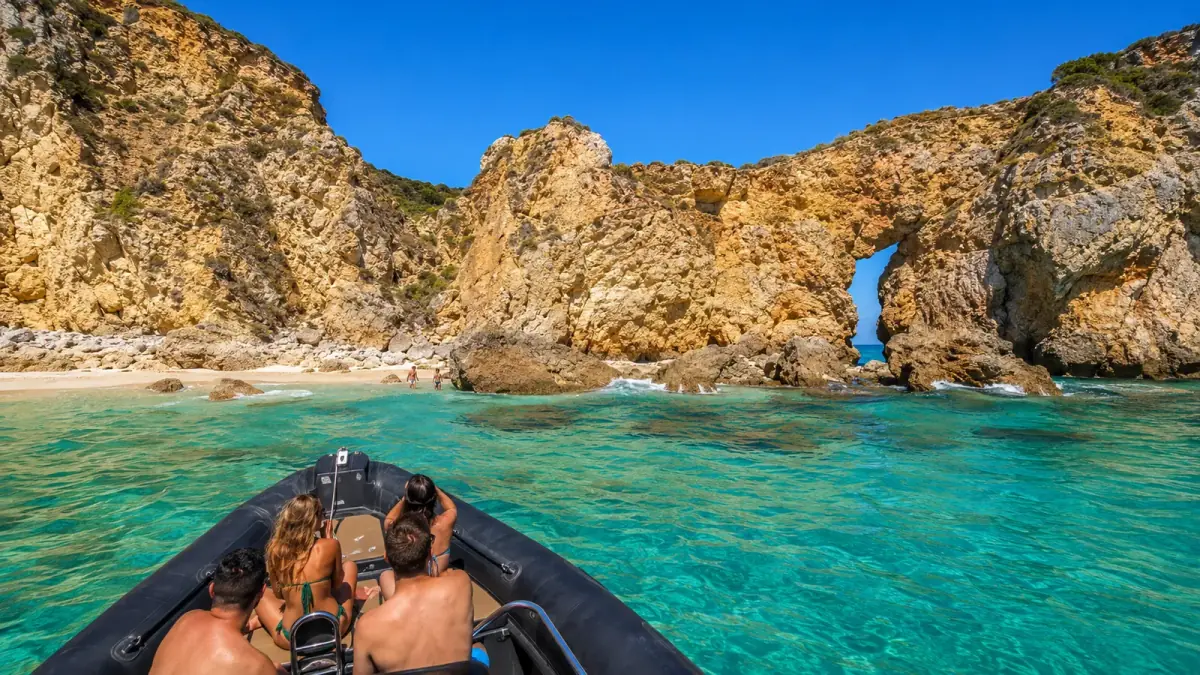
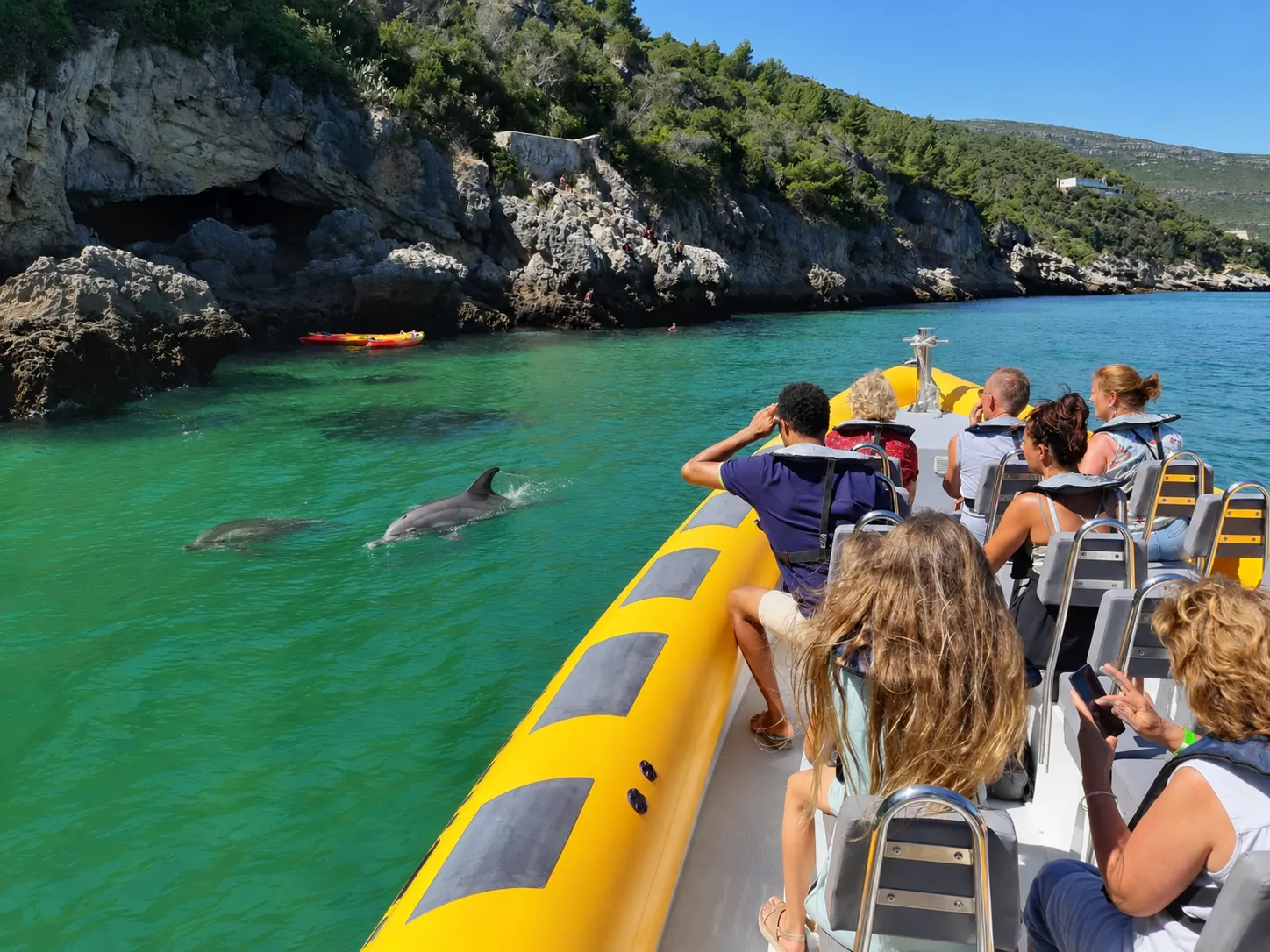
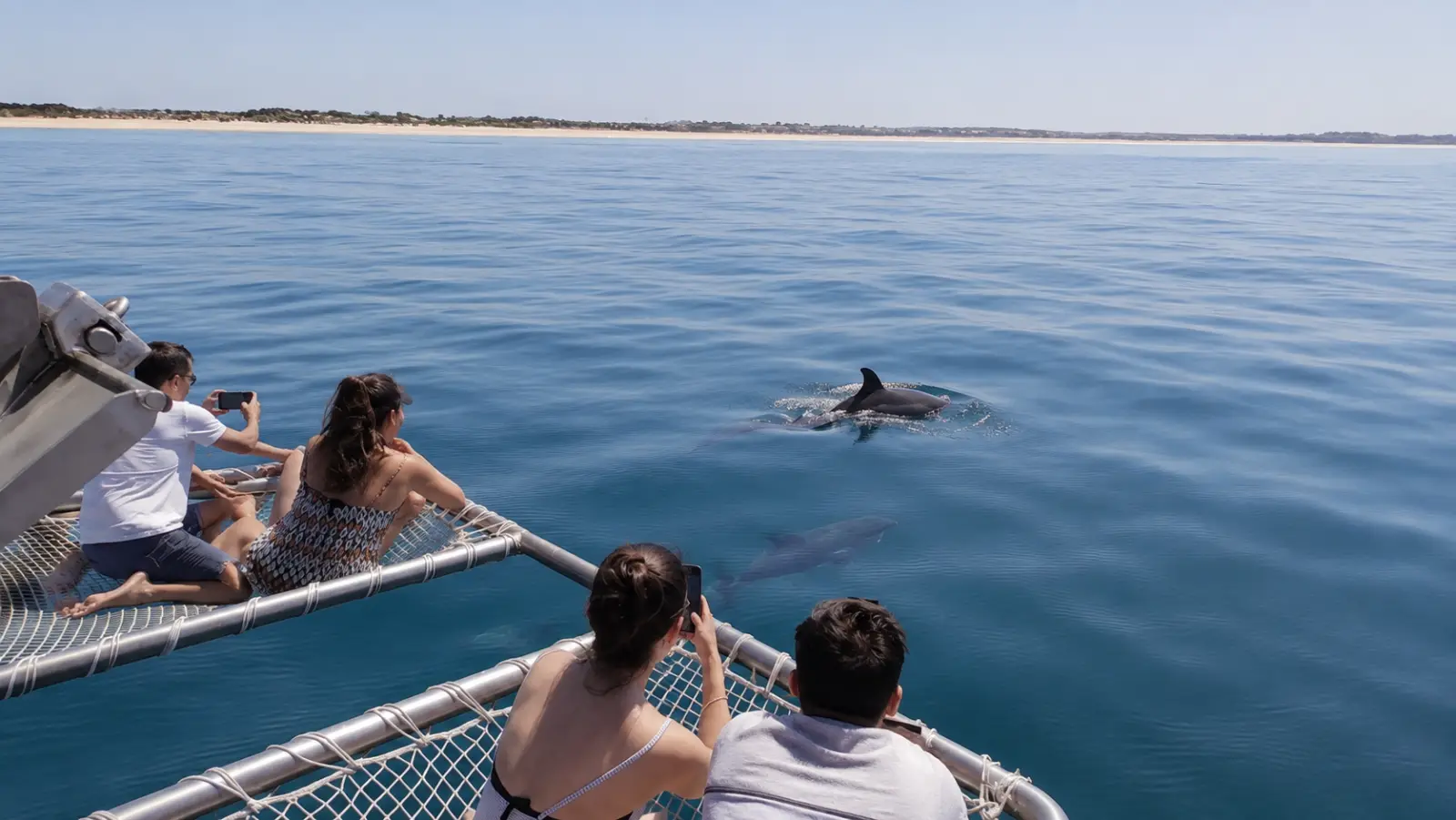
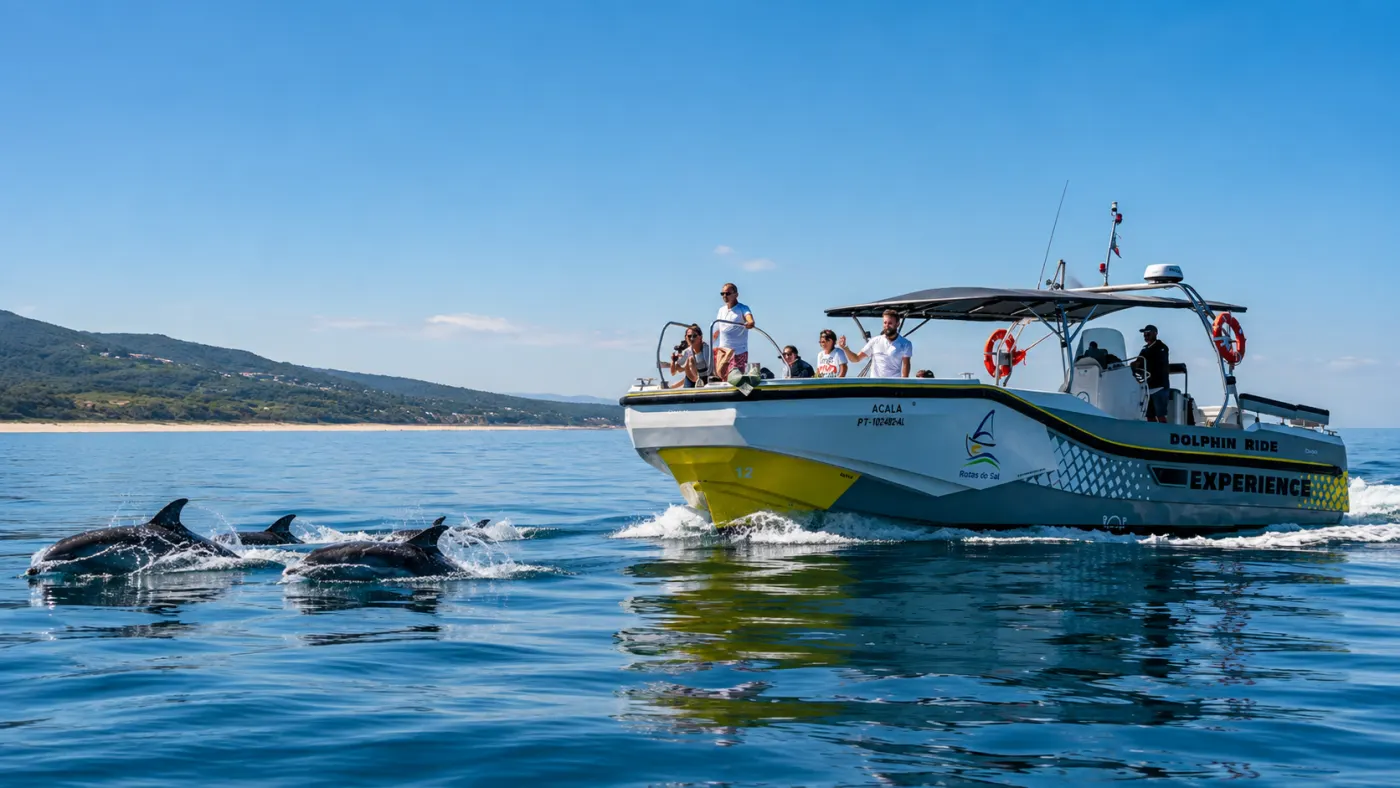
For a first trip a catamaran is the easier ride: steadier, more room, some shade, and calmer for children or anyone prone to seasickness. A fast boat sits low and feels more immediate, but you'll be shaken about more. Private trips cost more and let you set the time and pace, while longer routes add the Arrábida bays or a swim stop.
When is the best time to go?
Morning departures are usually calmer: the wind tends to pick up towards midday, and the estuary is flatter early on. There's no dolphin season — the pod is in the Sado year-round — but late spring, early summer and September are the most comfortable: calm sea and fewer people than in August. If you're going in August, check the current ICNF rules: in recent years watching in parts of the estuary has been restricted to ease pressure on the pod.
Are dolphin sightings guaranteed?
Sightings are common, but these are wild animals, so no honest operator promises 100%. Check the terms of the specific tour: some offer a free voucher to come back if no dolphins are seen. Swimming with the dolphins is not allowed — boats must keep their distance and follow the code of conduct.
Frequently asked questions
Where do the dolphin tours leave from?
Usually Setúbal or Tróia. Check the exact pier on your voucher — they are different departure points.
Two hours or a longer route?
Two hours is enough if you only came for the dolphins. Take the longer trip if you want the Arrábida bays and a swim as well.